I remember the first time I used Instagram. I was home from college, getting ready to spend a semester in London. My initial impression of the platform was that it was beautiful. I loved the aesthetic of the feed— which consisted of colorful photos and zero influencer posts. I utilized Instagram during my time abroad to capture the many wonderful places I visited. Back then, I didn’t really care about ‘likes’ or who commented on a post, however since that semester abroad, Instagram’s purpose has shifted a lot. The platform’s original goal was to allow users to share photos. Now— it’s a marketing tool for businesses and influencers, which has triggered some very unhealthy habits for its users, such as spending hours scrolling through feeds with no purpose, otherwise known as “doom-scrolling.”
The Experiment
I don’t post often on Instagram, however I am definitely guilty of “doom-scrolling.” When I had to give up Instagram for five days for a graduate school assignment, I was relieved. I used two apps to capture data showing my progress: OffScreen, which tracks a variety of usage statistics such as how many times you unlock your phone every day, and StayFree, which looks at how long you use each app. I created infographics to showcase the data.
The Results
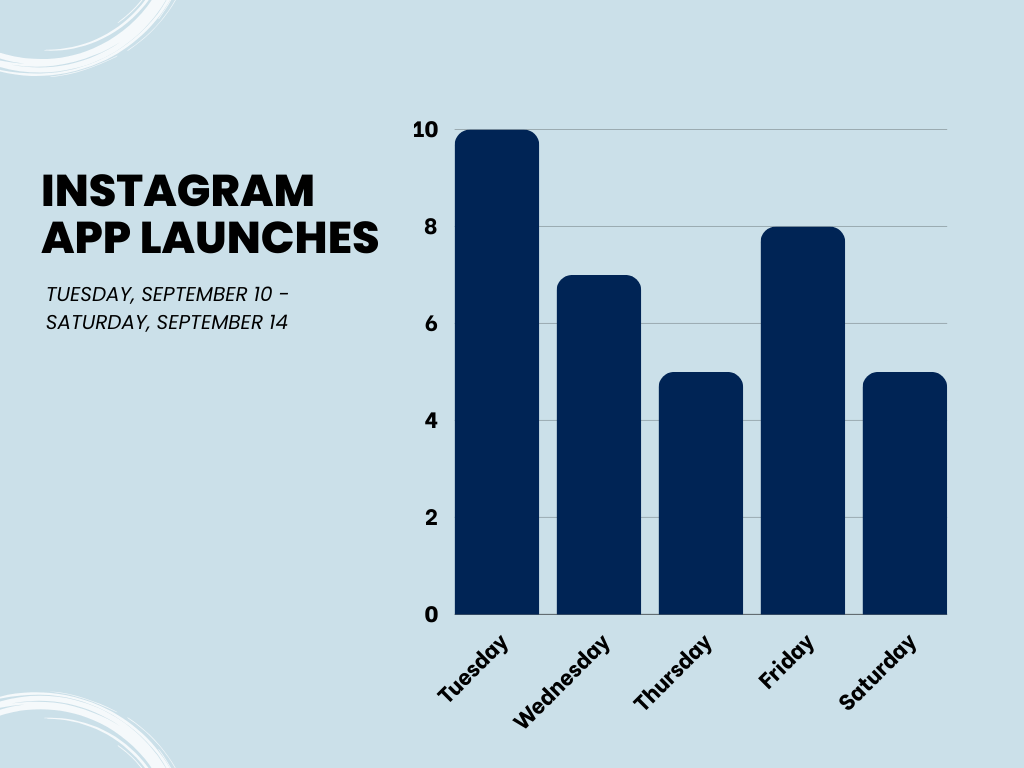
I knew that giving up Instagram would be hard—but I didn’t think it would be this hard. On Day 1, I picked up my phone for the first time at 5:16am and within about 30 seconds I had already opened the app. What’s worse is it took me another 30 seconds to realize what I had done. I did this nine more times throughout the day. Fortunately, my accidental Instagram viewings seemed to drop over the course of the experiment, however my screen time did not. Each time I grabbed my phone, I found myself anxiously looking for an app to open. I defaulted to Facebook, which I rarely used before this assignment. At one point I asked myself, why turn to Facebook? I think it comes down to two things 1) I craved the action of scrolling, because it was ingrained in my daily life and 2) I didn’t want to feel like I was missing out on things happening in my social circle.
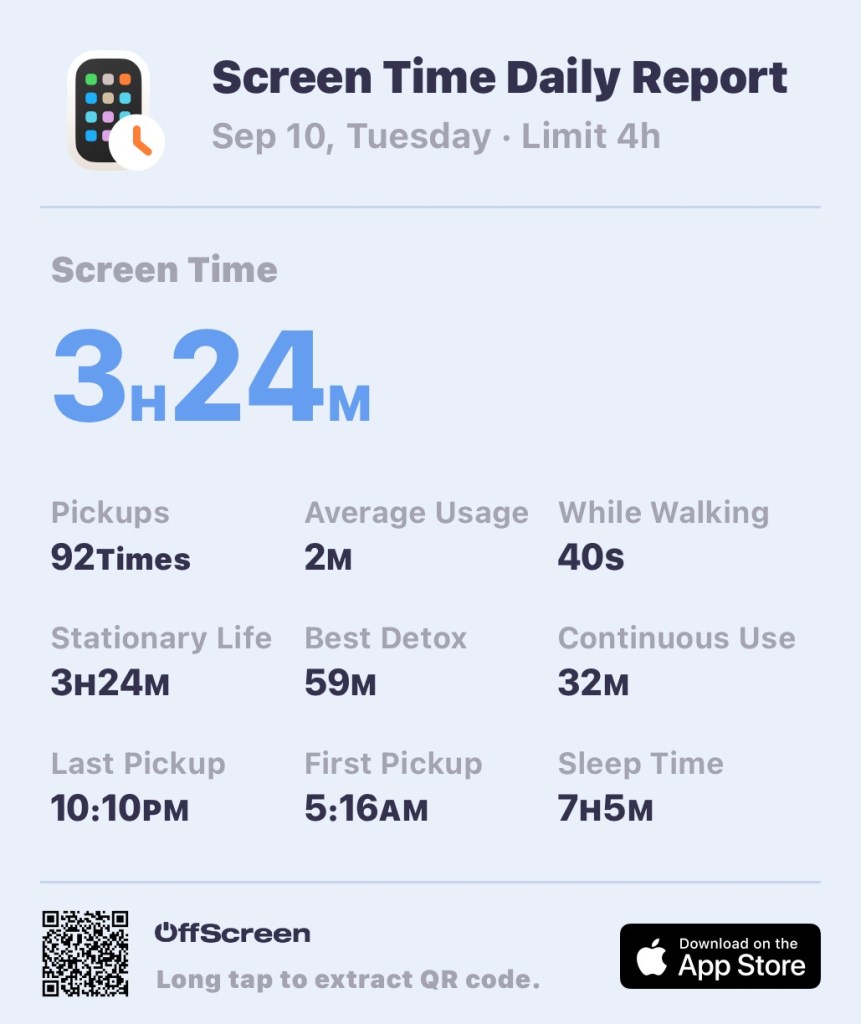
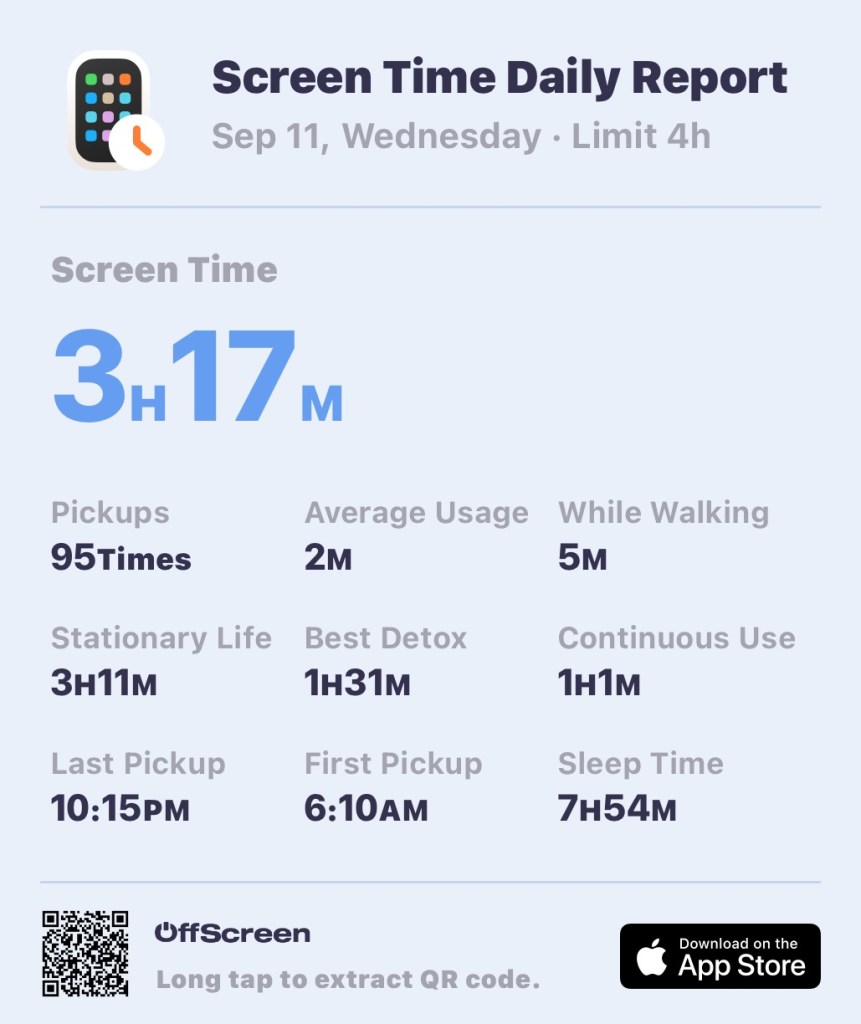
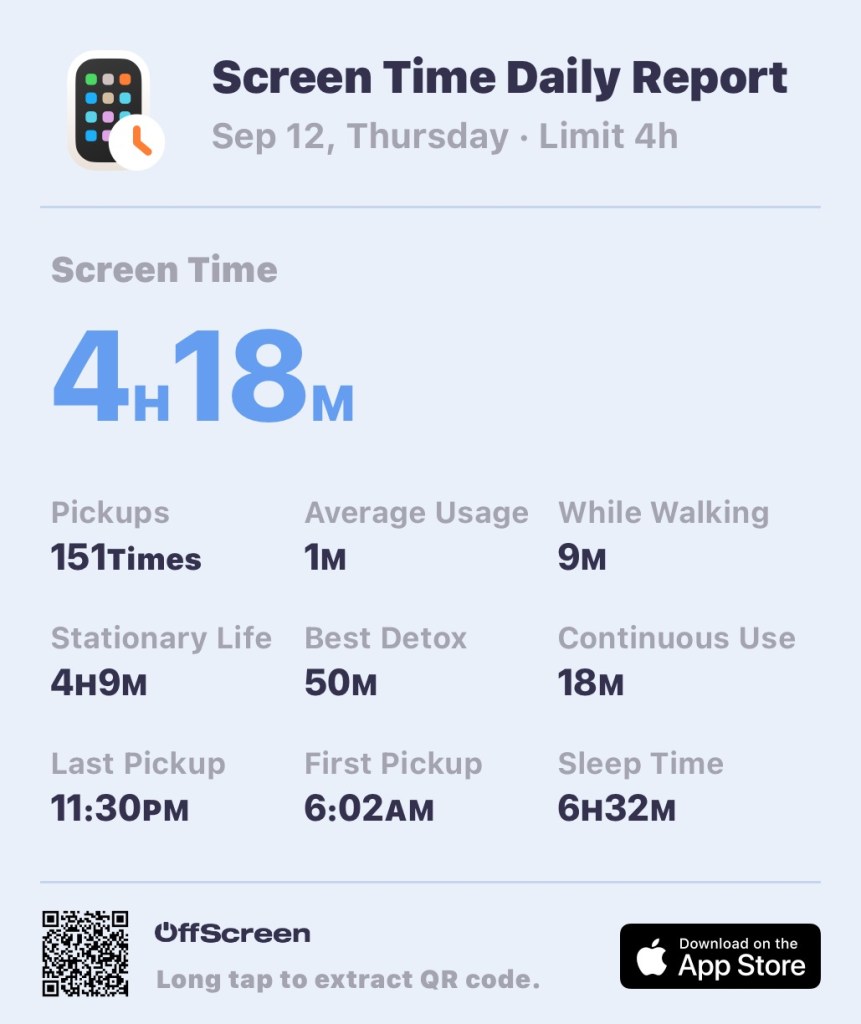
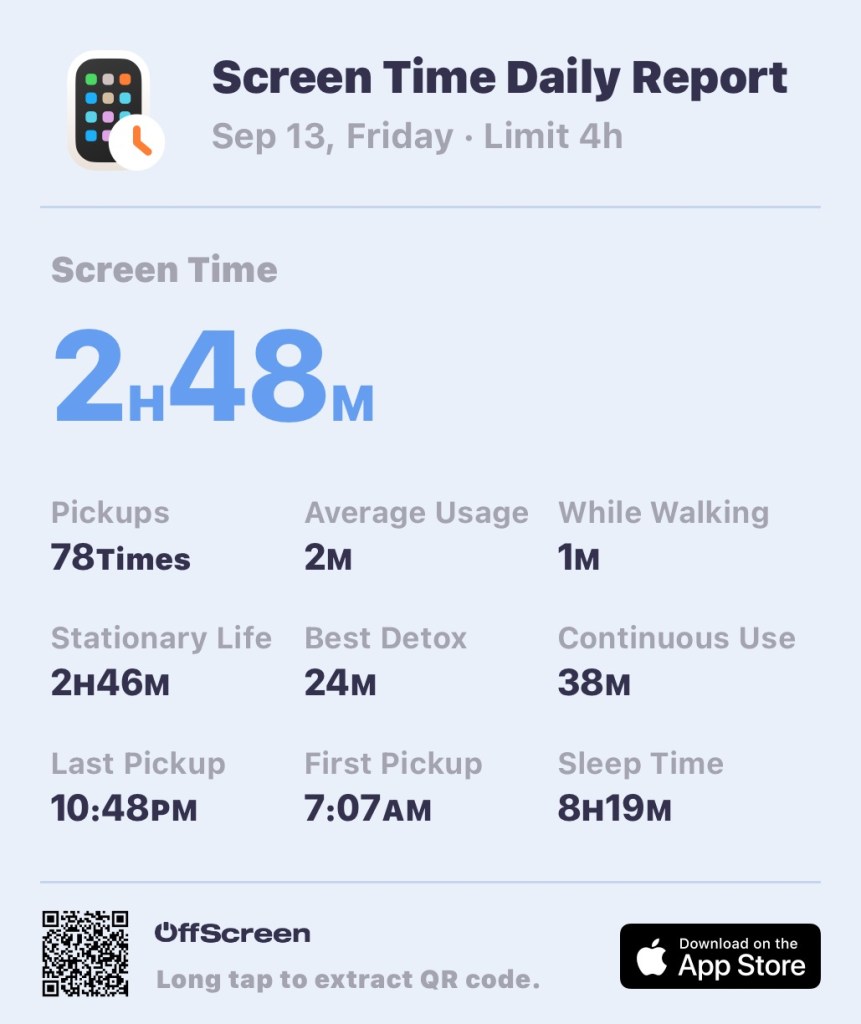
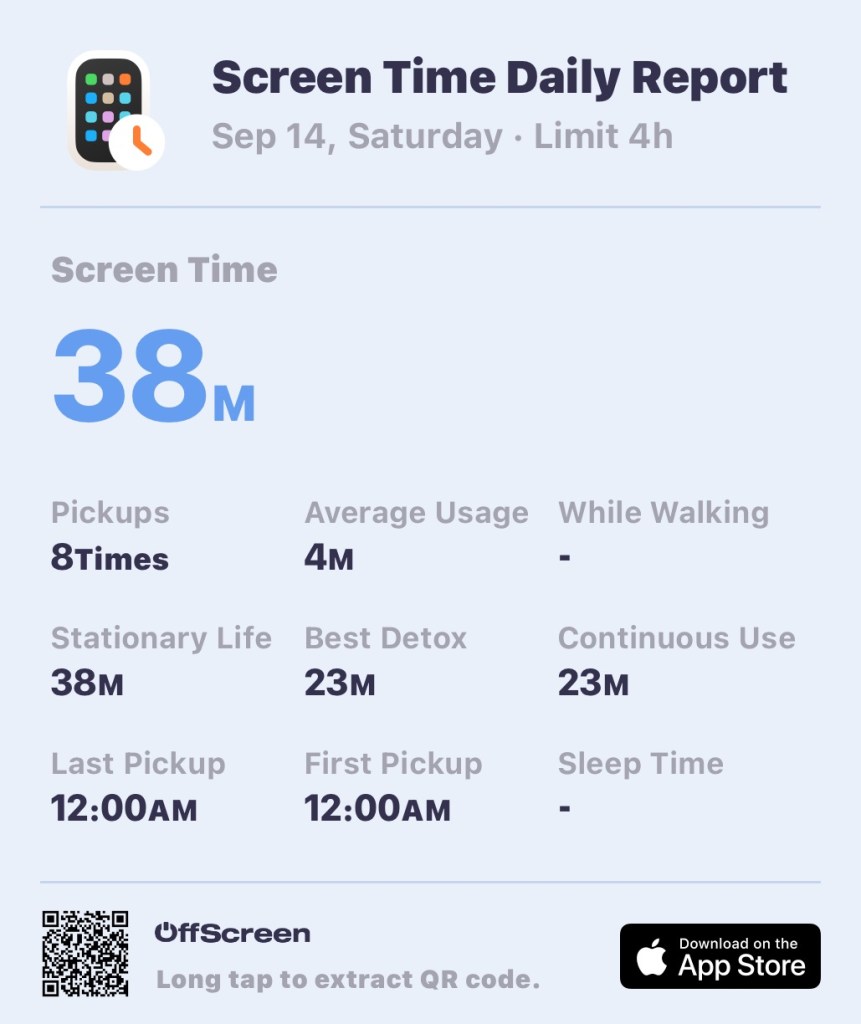
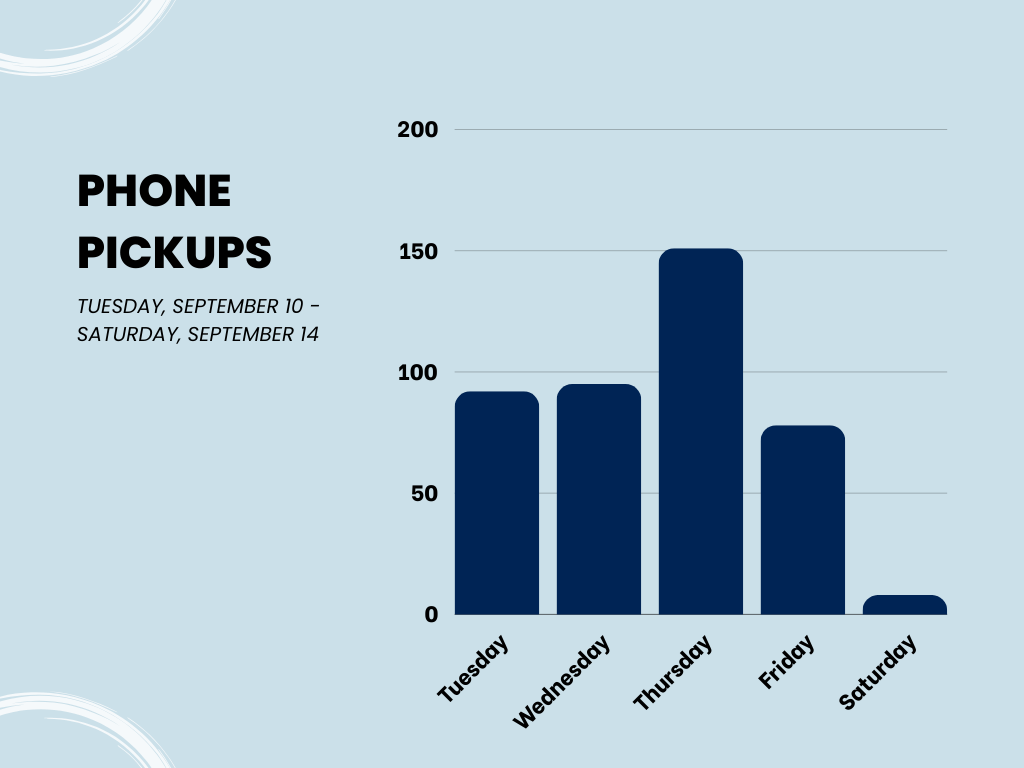
Things got really interesting on Day 3, when I flew to Boston for a weekend trip with my college friends. This was a true test of the detox because traveling is when I use Instagram the most. To my surprise, I didn’t open Instagram much, however I did unlock my phone screen 151 times one day. My best day was Saturday and I credit the success to our packed itinerary. I had almost no time to check my phone which allowed me to be present with my friends. Also, my battery died at one point.
*Note: My first and last pickup times on Saturday did not record.
Final Thoughts
After some reflection, I have determined that I unlock my phone when I am bored or stressed. It’s essentially a coping mechanism and I think that social media companies capitalize on that. According to Johann Hari, the platforms are designed this way; he says “your distraction is their fuel (114).” Once I removed the distraction of Instagram for this experiment, I felt more present. I think the next step would be to expand on the detox and eliminate all social media platforms for the same 5-day period.
Works Cited
Hari, Johann. Stolen Focus: Why You Can’t Pay Attention. Bloomsbury Publishing, 2023.
 Allison Lucas