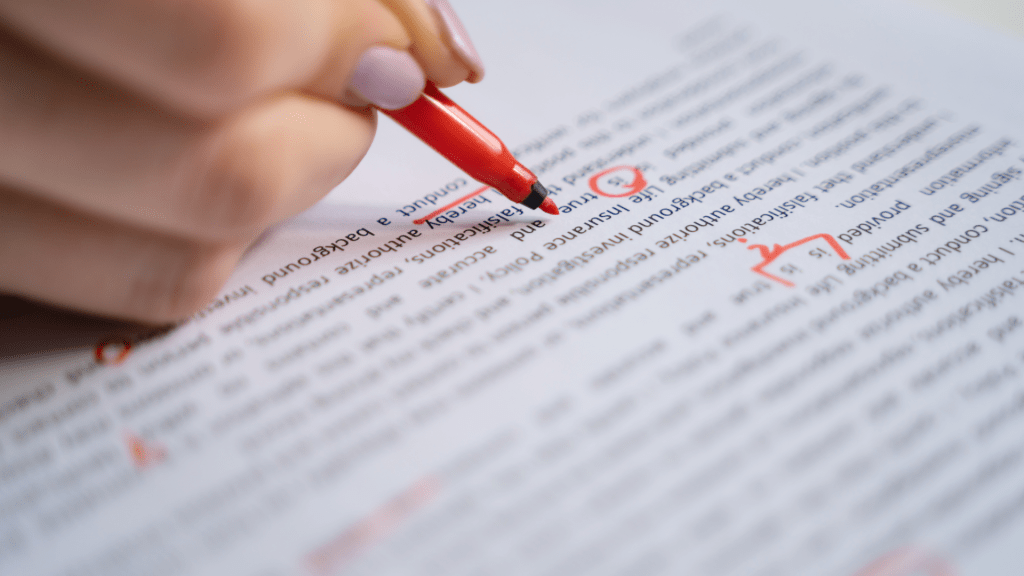
Let’s face it— writing is hard. Writing simply is even harder. When we write, there is often this nagging feeling that we need to add more to each sentence. Like somehow the sentence in its simplest form isn’t enough. I believe that this itch comes from how we were taught to write in grade school. My teachers always pushed adjectives or intensifiers like the word ‘very.’ When I started as a journalism major at Elon University, it took some time to break this habit. So much of who I am as a professional comes from my experience as a news producer and although I am no longer in the business, I am grateful for the skills I learned during that time. One of them is writing simply. In news, you can’t write long and fluffy sentences, because 1. There is a time constraint on the show and 2. That type of writing is difficult for the audience to follow when someone is reading it to them. Short, sweet, and to the point is the name of the game. Although broadcast writing puts a significant emphasis on brevity, this concept can be applied to all forms of writing.
The key to writing simply is to ask yourself: what am I trying to say? In my experience, if you explain what you are trying to say out loud it will come out much simpler than it does on paper. In his book On Writing Well, William Zinsser suggests stripping the sentences in your writing down to their bare bones (Zinsser, 2013). Once you do that, then you can build it back up with embellishes— but be careful. You know that feeling when you clean your house and it looks spotless? It is clutter-free but slowly items start creeping their way back into the spaces. You must make sure the clutter doesn’t overwhelm the content. But how do you strip down the sentences? Zinsser suggests the bracketing method — or putting these marks around any superfluous words.
Another important reminder for writing simply is don’t fall in love with your work. This is a tough one. As writers, we work hard to generate engaging writing. We labor over each word, sentence structure, tone, etc. so when we need to make cuts, it can be discouraging. It may even seem impossible. It is possible. Most of the time you can get your message across in fewer words. According to Zinsser, up to 50% of a first draft can be cut. A lot of times we choose to keep sentences because we are proud of the way they sound, but they may not contribute to the overall flow of the piece.
An important idea to keep in mind when writing, is that reading is not a natural human behavior (Carr, 2023). We have to train our minds to translate the symbols we see on a page. If a reader has to navigate a lot of jargon and extra words, it is less likely they will continue reading.
Works Cited
Carr, N. (2023, October 3). Is Google making us stupid?. The Atlantic. https://www.theatlantic.com/magazine/archive/2008/07/is-google-making-us-stupid/306868/
Zinsser, W. (2013). On Writing Well. Harper Paperbacks.
 Allison Lucas